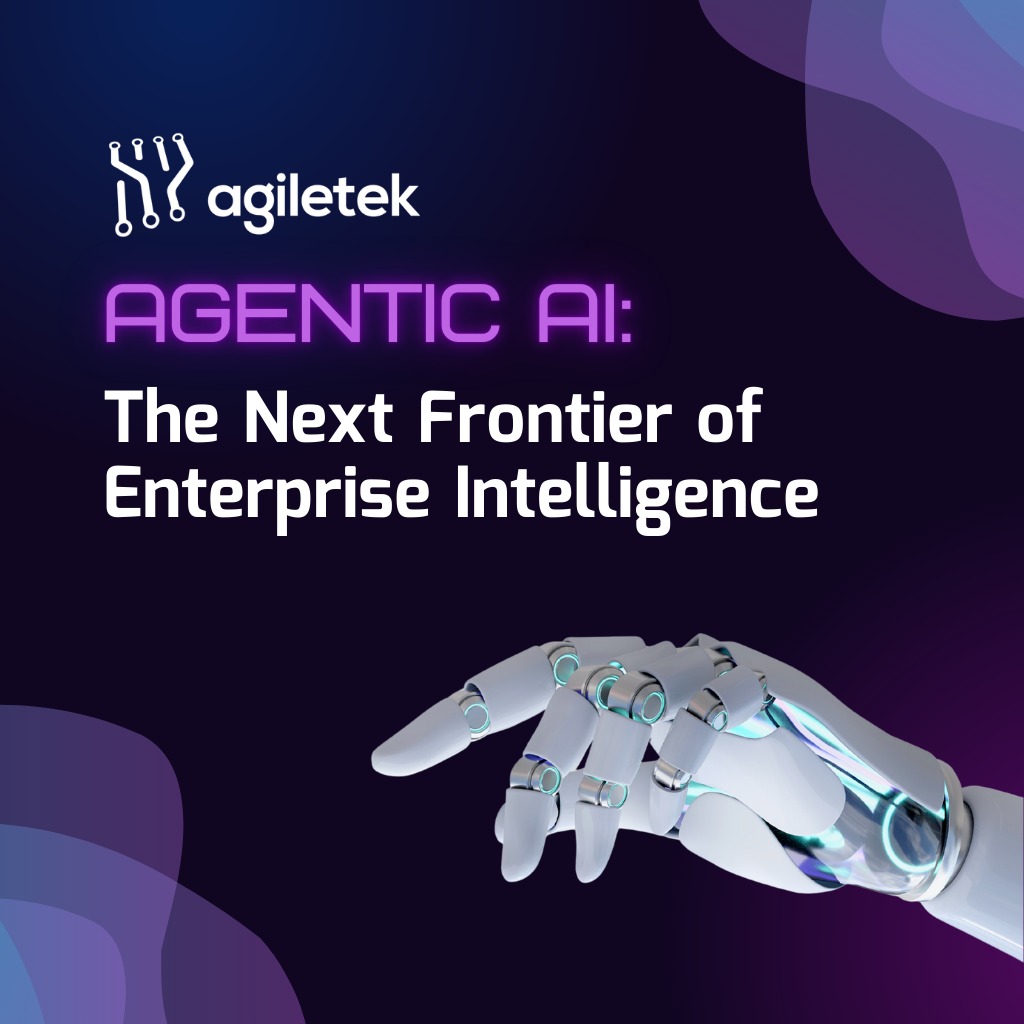
Artificial intelligence has rapidly evolved from experimental research to a foundational capability across modern enterprises. Over the past few years, generative AI has transformed how organizations create content, analyze information, and interact with data. However, the next stage of AI evolution is already emerging. This next phase is known as Agentic AI.
Agentic AI represents a meaningful shift in how artificial intelligence systems operate. Instead of producing outputs only when prompted by humans, these systems can evaluate goals, plan actions, and execute tasks independently within defined parameters. For enterprises seeking to move beyond traditional automation and toward truly intelligent operations, Agentic AI may become one of the most transformative technologies of the coming decade.
Understanding Agentic AI
Traditional AI systems typically perform specific tasks within narrow boundaries. Even advanced generative AI models still depend on human prompts to produce results. Agentic AI introduces a different approach. These systems are designed to understand objectives, break them down into smaller steps, and carry out workflows across multiple systems and tools.
In practical terms, Agentic AI behaves less like a tool and more like a digital collaborator. An AI agent can analyze context, adapt to changing conditions, and refine its decision making through continuous feedback. Instead of simply responding to commands, these systems can actively pursue defined outcomes while remaining aligned with enterprise policies and governance structures.
This capability shifts artificial intelligence from assisting human work to actively supporting operational execution.
Why Agentic AI Matters for Enterprises
Modern organizations operate in highly complex digital environments. Cloud infrastructure, distributed data systems, cybersecurity threats, and evolving customer expectations require constant attention and rapid decision making. Managing these environments manually is becoming increasingly difficult.
Agentic AI helps address this complexity by allowing systems to monitor conditions continuously, interpret large volumes of operational data, and take action when needed. When anomalies, inefficiencies, or risks are detected, AI agents can initiate corrective steps within the boundaries established by the organization.
This approach reduces operational delays and improves responsiveness. Human teams can then focus their time on strategic priorities rather than routine operational tasks. As enterprises continue expanding their digital capabilities, intelligent systems that can operate with greater autonomy will become essential for maintaining efficiency and resilience.
Key Enterprise Use Cases
One of the most promising areas for Agentic AI is cloud operations. Large scale cloud environments require constant monitoring to ensure reliability, security, and cost efficiency. AI agents can analyze usage patterns, identify inefficiencies, and adjust resources dynamically. This allows organizations to maintain optimal performance while controlling infrastructure costs and reducing the risk of outages.
Cybersecurity is another area where Agentic AI is gaining traction. Security teams often face an overwhelming number of alerts and threat signals. AI agents can analyze suspicious activity, investigate potential threats, and initiate predefined response procedures. By assisting with detection and response activities, organizations can improve their security posture and respond to incidents more quickly.
Software development and DevOps processes can also benefit from agent driven intelligence. Modern development pipelines involve multiple systems including code repositories, testing platforms, deployment environments, and monitoring tools. Agentic AI can observe these workflows, identify inefficiencies, and optimize the delivery process. This enables faster and more reliable software releases while maintaining governance and compliance standards.
Enterprise workflow automation is another area where Agentic AI can deliver meaningful value. Many organizations rely on digital workflow platforms to manage internal services and operational requests. With Agentic AI, these workflows can become more adaptive and context aware. Instead of following rigid rules, intelligent agents can adjust processes based on real time conditions and business priorities.
Governance and Responsible Deployment
While the capabilities of Agentic AI are promising, responsible deployment is essential. Systems that make autonomous decisions must operate within clear governance frameworks to ensure transparency, accountability, and security.
Organizations need to define clear boundaries for AI driven decision making. Human oversight should remain in place for high impact decisions that affect business outcomes, regulatory compliance, or customer trust. Strong data governance practices are also necessary to ensure that AI agents operate on reliable and secure information.
Continuous monitoring of AI models and decision processes will be critical for maintaining trust and ensuring alignment with organizational policies. By establishing these safeguards early, enterprises can adopt Agentic AI confidently while minimizing operational and ethical risks.
Preparing for the Autonomous Enterprise
The transition toward Agentic AI will require a strong digital foundation. Enterprises must continue investing in modern cloud architecture, integrated data platforms, cybersecurity frameworks, and AI governance practices.
Organizations that build these capabilities today will be better positioned to integrate autonomous systems into their operations in the future. As these technologies mature, AI agents will increasingly collaborate with human teams to manage complex digital ecosystems and support decision making across the enterprise.
The long term vision is an operational environment where intelligent systems continuously monitor performance, identify opportunities for improvement, and execute actions that enhance efficiency and resilience.
Looking Ahead
The next phase of enterprise transformation will be shaped not only by artificial intelligence but by autonomous intelligence. Agentic AI introduces a model where systems can reason, adapt, and act in pursuit of defined objectives while remaining aligned with human oversight and governance.
For organizations exploring the future of enterprise technology, Agentic AI represents an important step forward. Enterprises that begin preparing for this shift today will be better positioned to lead in a world where intelligent agents play an integral role in digital operations and innovation.